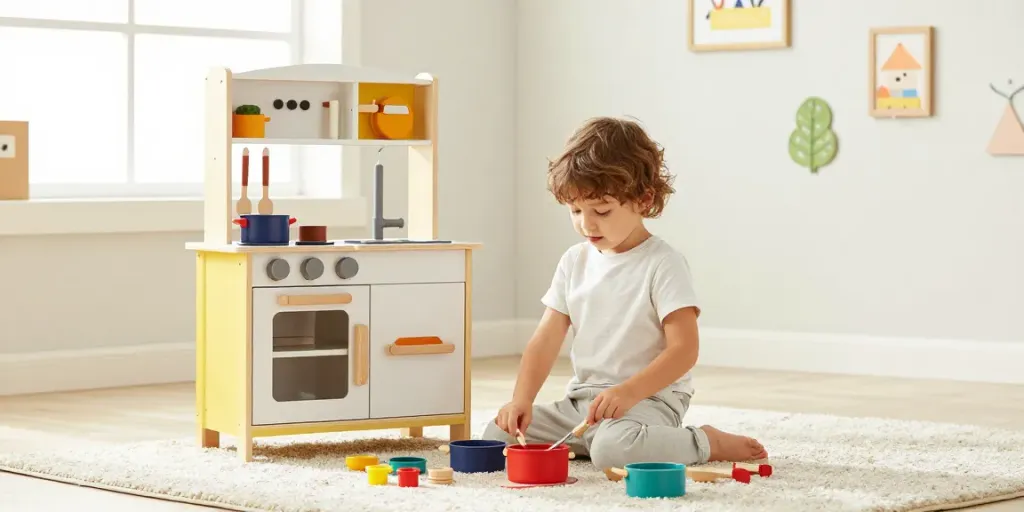
Understanding the Appeal of Play Kitchens
Play kitchens are enchanting playsets that transport children into a world of imaginative cooking and culinary creativity. As more parents recognise the educational benefits of pretend play, these toys have surged in popularity. From toddlers to young school children, a play kitchen serves as a tool not just for entertainment but also for skill development and social interaction.
What Makes a Great Play Kitchen?
A great play kitchen embodies a blend of functionality, design, and durability. It should mimic a real kitchen with realistic appliances such as ovens, microwaves, and refrigerators. Features like knobs that click, doors that open, and even sounds that imitate real cooking enhance the immersive experience. Additionally, a good play kitchen should be constructed from safe, non-toxic materials to ensure that children can play without risk.
Age Considerations for Play Kitchen Users
When selecting a play kitchen, it's essential to consider the age of the child. Most play kitchens are designed for toddlers and preschoolers aged 2 to 6 years. However, there are larger models available that can cater to older children as well. Ensuring the right scale will not only enhance playability but also encourage a sense of independence as children can reach all areas of the kitchen.
The Benefits of Pretend Play in Childhood Development
Pretend play is a fundamental aspect of childhood development. It fosters creativity, enhances language skills, and encourages problem-solving abilities. Through role-playing, children learn about daily tasks, social roles, and even basic cooking skills. Play kitchens particularly help children to engage in cooperative play, which is pivotal for developing social skills and emotional intelligence.
Popular Features in Modern Play Kitchens
Durable Materials and Safety Standards
In today’s market, parents are increasingly aware of the materials used in children’s toys. Modern play kitchens are crafted from robust materials designed to withstand the rigours of enthusiastic play. Many brands now prioritise safety standards, ensuring that their products are free from harmful substances. Purchasing a kitchen from a reputable brand is paramount for ensuring longevity and safety.
Interactive Elements for Enhanced Engagement
Modern play kitchens often incorporate interactive elements that enhance engagement. Features such as lights that simulate oven heating, or sound effects that mimic cooking noises can captivate children’s attention. Some designs even integrate technology, allowing children to use apps to enhance their cooking experience with games or lessons.
Design Trends in 2026: Eco-Friendly Options
As the awareness of environmental issues grows, many manufacturers are turning to eco-friendly materials for their play kitchens. In 2026, expect to see a rise in kitchens made from sustainable wood sources and biodegradable plastics. These products not only reduce the carbon footprint but also teach children the importance of taking care of the environment.
Choosing the Right Play Kitchen for Your Child
Top Brands and Their Unique Offerings
When it comes to selecting a play kitchen, several brands stand out for their unique offerings. KidKraft, for instance, is renowned for its large, multi-functional kitchens that inspire imaginative play. Step2 offers more robust, weather-resistant models suitable for outdoor play. Each brand has a distinctive style and features, making it crucial to assess which kitchen aligns with your child's interests and play style.
Budgeting for a Quality Play Kitchen Experience
Prices for play kitchens can vary significantly, ranging from affordable models to high-end, custom options. Setting a budget is essential, but it's crucial to remember that investing in a quality kitchen can yield years of enjoyment and engagement for your child. Look for sales or consider purchasing gently used kitchens to stay within your budget while still providing a fantastic play experience.
Essential Accessories to Enhance the Play Experience
To enrich the play kitchen experience, consider investing in accessories such as play food, cooking utensils, and cleaning supplies. These items can augment the imaginative play, allowing children to create meals, host dinner parties, or even clean up after a 'busy' cooking session. Accessories can often be found as themed sets that match the design of the kitchen, providing cohesive play experiences.
Building a Creative Play Space Around the Kitchen
Incorporating Storage Solutions for Toys
Creating an inviting and organised play space around the kitchen is essential for enhancing the play experience. Storage solutions such as bins, shelves, or toy chests can help keep the play area tidy and accessible. A well-organised space encourages children to engage more fully as they can easily find and put away their toys.
Creating Themed Play Areas for Imagination
To further ignite the imagination, consider creating themed play areas around the kitchen. For example, a dining set can enhance the experience of hosting a meal, while a small market stall can encourage children to 'shop' for their ingredients. Themed accessories can lead to more immersive play experiences and provide endless creativity.
Tips for Encouraging Cooperative Play
Encouraging cooperative play can significantly enhance the developmental benefits of using a play kitchen. Invite siblings or friends to join in on the fun, promoting teamwork and social interaction. Setting up roles can create opportunities for children to practice communication skills and negotiation, as they decide who will be the chef, the customer, or the waiter.
Future Trends in Play Kitchens and Children’s Toys
The Rise of Technology-Integrated Play Kitchens
The future of play kitchens will likely involve more advanced technology. Hybrid models that combine traditional play with digital elements are on the rise, providing an educational component that can teach children about nutrition, meal preparation, and even languages through interactive applications.
Innovative Materials and Sustainable Practices
As sustainability takes centre stage, new materials and practices are being introduced to the toy industry. Future play kitchens may utilise recycled materials or come equipped with smart features that teach children about responsible consumption and environmental stewardship.
Predictions for Play Kitchens in 2026 and Beyond
Looking to the future, play kitchens are set to become more innovative and engaging. With the potential for augmented reality experiences that allow kids to participate in ‘cooking shows’ or virtual kitchens, the possibilities are endless. These advancements will encourage more than just play; they will foster learning and creativity in the kitchen.
What age should a kid get a play kitchen?
Generally, children aged 2 to 6 years will benefit the most from a play kitchen, although there are options suitable for older children who still enjoy imaginative play.
How much does a play kitchen cost?
Prices can vary widely, from around £50 for basic models to over £300 for high-end, elaborate kitchens with multiple features.
Is it worth getting a play kitchen?
Absolutely! A play kitchen not only provides entertainment but also offers numerous educational benefits, including fostering creativity and improving social skills.
Which play kitchen is the best?
The best play kitchen varies by brand and model; however, look for options that offer durability, interactive features, and safety standards suitable for young children.
What accessories enhance a play kitchen?
Accessories such as play food, utensils, and aprons can greatly enhance the play experience and encourage more engaged and imaginative play.